
Written by craig braddick

Choosing a Senior Living Floor Plan in Arizona
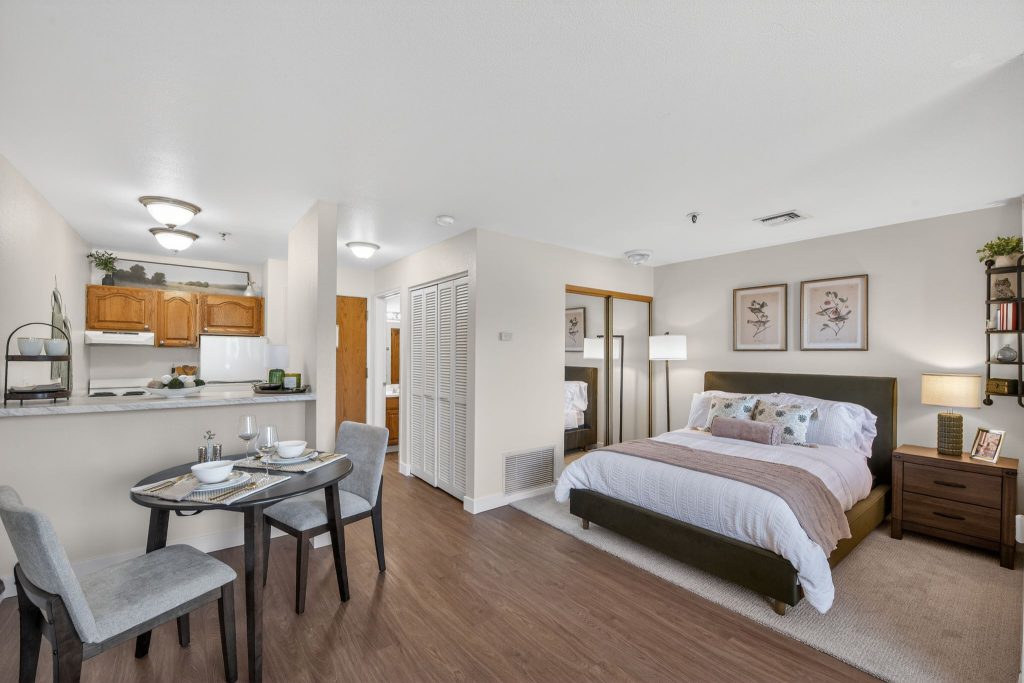
Compare studios, one bedroom and two bedroom senior apartments to find a practical fit.

How to Choose the Right Senior Living Floor Plan in Arizona

A floor plan can look spacious on a website and feel completely different once furniture, walking space and daily routines are considered. Choosing a senior living apartment is not simply a matter of selecting the largest layout within the budget. The best space is the one that supports the way the resident actually lives.

SLS communities offer a range of studios, alcoves, one bedroom and two bedroom apartments, depending on the location and level of living. Before choosing, look beyond the square footage and picture an ordinary day from morning to bedtime.

Start With the Furniture That Matters Most

Few people need to bring everything from a long occupied house. Most do have several pieces that make a new apartment feel familiar. Measure the bed, favorite chair, dining table, dresser and any cabinet that carries real sentimental or practical value.

Then compare those measurements with the floor plan. Allow space to open drawers, move around the bed and reach windows or closets. A room that technically holds the furniture may still feel crowded if every pathway becomes narrow.

Photographs of the current rooms can help family members decide what to keep. Marking furniture dimensions with painter’s tape during a tour can make the available space easier to understand.

Decide Whether a Studio Fits the Routine

A studio or alcove can be comfortable for someone who prefers a simple arrangement and spends much of the day in community spaces. Everything is close at hand, cleaning is easier and there is less unused space to furnish.

Privacy still matters. Think about where a visitor would sit, whether the sleeping area feels separate enough and how television, reading and rest will work in the same room. A well planned studio can feel welcoming, but it should match the resident’s habits rather than being chosen only because it costs less.

Consider the Benefits of a Separate Bedroom

A one bedroom apartment creates a clear division between sleeping and daytime living. That may help someone who likes to entertain, watch television late, work on hobbies or simply close the bedroom door in the morning.

The extra room can also make visits more comfortable because the bed is not the first thing guests see. For couples, a one bedroom layout may provide enough separation for different sleep schedules while keeping the apartment manageable.

Look closely at storage. A separate bedroom does not automatically mean better closets, so compare usable storage rather than relying on the floor plan label.

Know When Two Bedrooms Are Worth It

A second bedroom can serve as a guest room, office, hobby space or quiet room for one member of a couple. It may also provide space for a family member to stay briefly during a transition.

The drawback is paying for an area that may be used only occasionally. Before choosing two bedrooms, ask how often overnight guests truly visit and whether the community has other spaces for hobbies or family gatherings. A smaller apartment combined with good common areas may work better than maintaining a room that remains closed.

Check Movement, Safety and Accessibility

Walk the apartment as it will be used. Consider the route from the bed to the bathroom at night, the turning space near doors and the location of electrical outlets. A walker or wheelchair needs more clearance than a floor plan drawing suggests.

Check the shower entrance, flooring transitions, kitchen reach and amount of natural light. Ask whether grab bars or other approved modifications can be added. The right apartment should continue to work if balance or mobility changes.

Compare Floor Plans at SLS Communities

SLS Communities provides a variety of apartment choices across its Arizona locations, including independent living, assisted living and memory care options. Available layouts differ by community, with choices that may include studios, alcoves, one bedroom apartments, two bedroom apartments and casitas. Bring your furniture measurements and daily priorities to the tour rather than choosing from a drawing alone. Call SLS Communities at 480 348 0300 to compare locations and find a floor plan that feels practical, comfortable and genuinely like home.
References

SLS Communities Independent Living

Canyon Winds Floor Plans

Vista Winds Floor Plans

Chaparral Winds Floor Plans

CRISTA Senior Living Apartment Layout Guide

Written by craig braddick

Independent Living vs 55 Plus Communities in Arizona

Independent Living vs 55 Plus Communities in Arizona

Independent Living vs a 55 Plus Community in Arizona

Choosing between a 55 plus community and an independent living community can be confusing because both are designed for older adults who want a simpler lifestyle. The buildings may look similar, and both may offer activities, social spaces and neighbors at a similar stage of life. The difference usually appears in the services provided each day.

For Arizona retirees, the better choice depends less on age and more on how much home maintenance, meal preparation and daily planning they want to keep handling themselves.

How a 55 Plus Community Usually Works

A 55 plus community is generally an age restricted neighborhood or apartment development. Residents live independently and manage their own homes. Some communities provide clubhouses, pools, fitness areas and organized clubs, but household services vary.

A homeowner may still be responsible for repairs, utilities, insurance, cooking and transportation. Homeowners association fees may cover landscaping or shared amenities, but they do not automatically include meals, housekeeping or personal assistance. A renter may have fewer maintenance duties, although the arrangement still resembles ordinary residential living.

This option can suit an active retiree who wants an adult focused neighborhood while remaining comfortable with the practical work of running a home.

What Independent Living Adds

Independent living is also intended for older adults who manage their own personal care. The main distinction is that the community usually takes more everyday work off the resident’s shoulders.

Depending on the property and service package, meals, housekeeping, transportation, maintenance and scheduled activities may be included or available. Residents have a private apartment while gaining access to staff, common areas and a built in social calendar.

This can be useful for someone who is capable of living alone but no longer enjoys shopping for every meal, arranging repairs or driving for every appointment and activity.

Compare the Real Monthly Costs

A mortgage free house is not free to operate. Property taxes, insurance, air conditioning, repairs, yard care, groceries and transportation all remain part of the household budget. In a 55 plus community, many of those expenses continue, along with possible association fees.

Independent living may carry a higher monthly payment, but several regular costs can be combined into one arrangement. Ask exactly what the fee includes, which services are optional and how often prices are reviewed. Comparing only rent or a home purchase price can give an incomplete picture.

Think About Daily Life Rather Than Amenities Alone

A swimming pool and attractive lobby are pleasant, but they should not decide the move. Picture an ordinary Tuesday. Will you cook, clean and drive as you do now, or would you rather walk to a dining room, join an activity and let somebody else handle a leaking faucet?

Also consider how easily friendships develop. A 55 plus neighborhood may offer clubs, but participation often depends on the resident making the first move. Independent living generally places dining, activities and shared spaces closer to daily life, which can make casual contact easier.

Ask What Happens When Needs Change

A 55 plus community may not provide personal care if health or mobility changes. Residents may hire outside help or move elsewhere. Independent living communities also differ, so ask whether assisted living, memory care or home care is available through the same organization or nearby.

No community can promise that every future need will be met in one apartment. The useful question is whether there are clear options and people who can help explain the next step.

Compare Arizona Senior Living With SLS Communities

SLS Communities operates senior living locations in Mesa, Surprise, Peoria, Sedona and Youngtown, with independent living, assisted living and memory care options available across its communities. Floor plans, amenities and service packages vary by location, giving Arizona retirees several ways to compare the lifestyle they want now with the support they may value later. Call SLS Communities at 480 348 0300 to discuss your priorities and arrange a tour.

References

SLS Communities Independent Living

SLS Arizona Senior Living Communities

Fountain View Independent Living Versus 55 Plus Communities

Cardinal Bay Differences Between 55 Plus Communities and Independent Living

Written by craig braddick

Assisted Living Move In Checklist for Arizona Families

Assisted Living Move In Checklist for Arizona Families

Moving into assisted living involves more than choosing what will fit inside a new apartment. Families must also organize medications, records, furniture and the smaller belongings that make a place feel familiar. Starting early makes the move calmer and reduces the chance that an important item disappears into the wrong box.

Every community supplies different furniture and services, so use this checklist as a starting point. Before packing, ask the chosen community for its own move in instructions, apartment measurements and list of items that are already provided.

Confirm the Apartment Details First

Obtain a floor plan and measure the rooms, doorways and available wall space. Ask whether the apartment includes a bed, window coverings, shower curtain, refrigerator or microwave. Find out which electrical appliances are permitted and whether there are rules for hanging pictures or bringing a pet.

SLS Communities offers several apartment layouts, with studio, one bedroom and two bedroom options depending on the location and level of living. Some independent living locations also offer casitas. Knowing the exact layout prevents families from moving furniture that will not fit.

Gather Documents and Health Information

Keep essential paperwork in one clearly marked folder rather than placing it on the moving truck. Include identification, insurance cards, emergency contacts, current medical information and copies of any documents the community has requested.

Prepare an up to date medication list showing the name, dose and usual schedule for each prescription. Ask the community how medicines should arrive and whether they must remain in original pharmacy containers. Do not make changes to medication or bring large supplies without checking first.

Glasses, hearing aids, mobility equipment and dental items should travel with the resident. Pack chargers, batteries and labelled cases for anything used daily.

Pack Comfortable Arizona Clothing

Choose clothing that is easy to put on, comfortable for activities and suitable for the resident’s normal routine. Pack lightweight outfits for Arizona weather, but remember that air conditioned dining rooms and common areas may feel cool. A cardigan, light jacket and several pairs of nonslip shoes are useful.

Bring sleepwear, undergarments, socks, a robe and a small selection of dressier clothing for meals, worship services or special events. Avoid filling the closet with rarely worn items. Seasonal clothing can be exchanged later.

Make the New Space Familiar and Safe

A favourite chair, familiar bedding, family photographs and a well known clock can make an apartment feel settled quickly. Bring a few meaningful decorations rather than every ornament from the previous home. Hobby supplies, books, music and a familiar mug can also help the resident continue normal routines.

Safety should guide furniture choices. Leave clear walking routes between the bed, bathroom and doorway. Avoid unstable tables, crowded shelves, loose rugs and electrical cords stretched across the floor. The Centers for Disease Control and Prevention identifies clutter and throw rugs as common home hazards for older adults.

Know What Should Stay Behind

Large furniture, valuable jewellery, collections and duplicate kitchen equipment are usually better left with family or placed in secure storage. Check whether meals, housekeeping and laundry are included before packing supplies that may never be used.

Items with sentimental value should not all arrive on the first day. Rotating photographs, books and decorations gives families an easy way to refresh the apartment during later visits.

Prepare for Moving Day and the First Week

Label boxes by room and contents. Pack one personal bag with clothing, toiletries, medication, phone charger and anything needed for the first night. When possible, arrange the bed, favourite chair and photographs before the resident enters the apartment.

SLS Communities provides assisted living residents with personalized service plans, dining, housekeeping, laundry, transportation, an emergency call system and daily activities, although services may vary by location. For help choosing an Arizona community and preparing for move in day, call SLS Communities at 480-348-0300 to schedule a personal tour.

References

SLS Communities: Assisted Living

SLS Communities: Independent Living

National Institute on Aging: Preventing Falls at Home

Centers for Disease Control and Prevention: Facts About Falls

Alzheimer’s Association: Long Term Care

Written by craig braddick

Assisted Living for Couples in Arizona: What to Know

Assisted Living for Couples in Arizona: What to Know

Couples often reach retirement with different health, mobility and support needs. One partner may still drive, manage appointments and enjoy an active routine, while the other needs help with dressing, medication reminders or personal care. That difference does not automatically mean they must live far apart. It does mean they should look closely at how a senior living community supports each person.

The right arrangement protects both partners. It gives the person who needs care dependable assistance while allowing the other spouse to remain a husband, wife or partner rather than becoming a full time caregiver.

Can Couples Live Together in Assisted Living?

Many assisted living communities can accommodate couples, although apartment availability, admission requirements and care policies vary. A couple may share a one bedroom or two bedroom apartment when both residents meet the community’s requirements. In other cases, one spouse may live independently while the other receives assisted living or memory care nearby.

Before assuming a particular arrangement will work, ask the community to explain its policy in detail. Find out whether both people can share an apartment, whether each person is assessed separately and how fees are calculated when only one spouse needs personal assistance.

Begin With Two Separate Care Assessments

A couple shares a life, but each person has individual needs. A proper assessment should consider mobility, bathing, dressing, medication support, memory, nutrition and the ability to respond during an emergency.

This prevents the healthier spouse from quietly taking on duties that are becoming exhausting or unsafe. It also prevents the partner who needs help from receiving more assistance than necessary. Good assisted living should support independence rather than replace it.

SLS Communities prepares a service plan around the resident’s needs. Couples considering a move should discuss both current routines and the tasks one partner has been handling for the other at home.

Compare Apartments and Everyday Routines

Square footage matters, but daily life matters more. Ask whether the apartment has enough storage, room for familiar furniture and a bathroom that both partners can use comfortably. Check the walking distance to dining, activities, parking and outdoor areas.

Meals and schedules also deserve attention. Can spouses dine together if they receive different levels of care? Can they attend activities together? Is there enough privacy for the healthier partner to read, rest or welcome visitors while care is being provided?

SLS offers studio, one bedroom and two bedroom floor plans, depending on the community and level of living. Several locations also provide independent living, assisted living and memory care on the same campus.

Plan for Care Needs That May Change

The most important question may be what happens later. One spouse could require more help after an illness, fall or change in memory. Ask whether additional services can be added without moving, and what circumstances would require a transfer to another apartment or care setting.

If memory care becomes necessary, find out how close the two partners can remain and whether they can continue sharing meals, activities and private time. A thoughtful plan made before a crisis can reduce uncertainty for the couple and their family.

Understand the Full Monthly Cost

Couples should request a written explanation of rent, care fees, meals, housekeeping, transportation and other charges. Ask whether the second person pays an additional occupancy fee and whether care is priced separately for each resident.

The least expensive starting rate is not always the best value. Compare what is included, how often rates are reviewed and what a higher level of care would add to the monthly bill.

Tour Arizona Senior Living Communities Together

SLS Communities operates six Arizona communities with independent living, assisted living and memory care options available across its locations. Couples can compare communities in Mesa, Surprise, Peoria, Sedona and Youngtown while considering apartment choices, support needs and future plans. To discuss assisted living for couples in Arizona or arrange a personal tour, call SLS Communities at 480-348-0300.

References

SLS Communities: About Senior Living Services

SLS Communities: Assisted Living

SLS Communities: Independent Living

SLS Communities: Memory Care

Where You Live Matters: Supporting Couples With Different Care Needs

Written by craig braddick

Golf Clubs For Seniors

Golf truly is a game for a lifetime and modern advances in golf equipment have kept seniors playing the game they love for longer. But whether you are a beginner or a seasoned player, it is a game where the appeal never fades. In this article, we are going to talk about the various categories of clubs. Although we will not be recommending particular brands, the information will be very useful in making your next golf purchases.

Senior Does Not Mean Senior Or Does it?

Just because you are getting on in years it does not mean you automatically need senior flex shafts in your clubs. But if your clubhead speed has lessened over the years, how you assemble your set of clubs may be the key to lower scores. Known as “set make-up” – it really comes down to putting the clubs in your bag that give you the best chance of playing well. The late Arnold Palmer played golf against the kids on the PGA Tour well into his seventies as well as playing senior golf. One of his secrets was he adapted his equipment. He put more flexible shafts in his clubs, increased the loft on his driver, added some fairway woods and hybrids as well as oversized cavity back irons, wedges he felt comfortable with and rocked the modern putter for many years. Let’s look at each category of equipment for some ideas. By the way, although you can buy new and get totally custom fitted, there is now a burgeoning used golf club market, especially online. You can save money and still get great playing golf clubs!

Driver

The USGA (United States Golf Association) has set rules regarding the flexibility of driver faces so any top make driver made after 2010 or so should have a similar amount of face flexing. The 4 things the senior should look for are these:

1. Loft. Loft is your friend in golf. The Chances are you do not hit the ball as far as you used too. And yes, you may still be able to hit it out there 250 yards, but it is a fair bet the average is a lot less. A way to pick up some additional yards is to improve the “carry” distance on your tee shots and more loft helps you to do that. A lot of manufacturers offer Drivers in the 12-15 degree range of loft and they are definitely worth checking out if you can leave your ego alone!

2. Shaft length and weight. Many drivers are 46 inches long, yet the average driver length on the PGA Tour is 44.5 inches long. If you try a shorter driver, you will surprise yourself how much easier it is to hit the sweet spot and gain yardage by trimming an inch to an inch and a half off the grip end. It will not really impact the shaft flex but you can always add a little lead tape to the head if you like (one of Arnold Palmer’s tricks!)

3. Face Angle. Nowadays many drivers come with adjustable face angles to help counteract a tendency to hook or slice the ball. If you are a slicer, some manufacturers offer drivers with offset heads to reduce the slice and improve the launch angle of the ball.

4. Head size. There are some seniors who are just not comfortable with the 400cc to 460cc head size on modern drivers. Although you will give up a little distance on all but the purest hits, looking at some old school titanium club heads in the 250cc to 350cc range may help you find some confidence you can square the club up at impact. This may be especially the case if the shaft is also shortened and the loft is at least 11 degrees. Another bonus is these clubs are often less than $20!

Fairway Woods And Hybrids

Much of what can be said for drivers can also apply to fairway woods. Unless you can hit a 3 wood higher than a one level house, it is a club you probably do not need unless you play in a climate with very firm fairways where you may be able to eek out some yardage because of the roll. A 5 wood (hugely popular on all tours these days) will probably work better for you. Look for one with 18 or 19 degrees of loft and for the average sized person, a shaft of no more than 42 inches. A 7 wood and or a 9 wood (with between 21 and 24 degrees of loft) is also a great club for the senior to use as they work very well out of the rough as well as the fairway and tee box. The 5 wood can replace a 1-2 iron, a 7 wood, a 3-4 iron and a 9 wood a 4-5 iron. If you are looking for additional height, a shallow faced club may help, if you are using them more off the tee and from the rough, a slightly deeper face may help. Hybrids are iron replacements and are usually slimmed down looking hollow headed clubs designed to replace the longer irons. For most seniors a 1,2, or 3 iron is not a user friendly club but adding a 5 or 7/9 Wood combo and starting with a couple of hybrids in the 4 or 5 Irons can make the game a lot easier. You can even buy iron sets entirely made from hybrids. These are not “cheater clubs.” Lot’s of top notch players of all ages often have two or more in the bag.

Irons And Wedges

Assuming you have added a wood or a hybrid or two, your longest iron will probably be a 5 or a 6 iron. Cavity backed irons that spread their weight around the perimeter of the club is the way to go. Buying new or used, one of the most important things to get right is the lie angle (how the club is soled at impact with the ball.) Most golf clubs can be bent a couple of degrees in the neck area and with the help of a professional club fitter, this small adjustment to your irons may make shots a lot more accurate. Modern golf clubs are lofted stronger than clubs from the past. a Pitching Wedge in 1995 had around 48 degrees of loft, today 44 or 45 is commonplace as most sets now come with a Gap Wedge, an additional wedge of around 50 degree of loft before you get to the sand wedge (usually with around 56 degrees of loft.) Looking at some of the super senior professional golfers, it is notable, Gary Player, Jack Nicklaus, Tom Watson, Hale Irwin, Lee Trevino and many others do not carry a 60 degree wedge (also known as a Lob Wedge) so although you may want to carry one if you have a lot of hills and carries over sand traps around the greens on your home course, it is not by any stretch mandatory. A good sand wedge needs “bounce” on the sole (the number of degrees the back of the leading edge sits lower than the front of the leading edge.) If you play in wet conditions with a lot of fluffy sand in the bunkers, a sand wedge with 12 to 15 degrees of bounce is ideal. If you play on a course that is firm under foot with less sand in the traps, a sand wedge with 9 to 12 degrees of bounce will be a better weapon.

Putters

There is so much personal choice among putters. But whether you choose a traditional blade or centershaft putter, a Ping style heel to toe putter or one of the large and fashionable MOI putters, two things to look for. Most putters are too long for the user. You can cut it down and add weight with lead tape but take your putting stroke, see a professional and make sure your eyes are comfortable over the ball and then the right length of putter can be fathomed for you. Whatever design you choose, you will find a head weight that just feels ideal. Have fun trying different putters out and remember there are plenty of great putters on the used market!

Shafts And Grips

Modern graphite shafts do not have the performance issues of graphite from the 1980’s but it is amazing to hear experienced golfers still say silly things like: “Graphite turns the club into a hook machine” or “It has too much torque.” From a scientific viewpoint, that is simply not the case any more with decent quality graphite shafts the major manufacturers use. With its lighter weight, graphite should be a must for a seniors in their woods and hybrids and probably their irons as well. Most off the rack wedges come with “Wedgeflex” shafts, these are inevitably stiff shafted. Throughout his career, Jack Nicklaus used a sand wedge with a soft flex shaft and even if you keep steel in the wedges, having them reshafted with a more flexible shaft can help a great deal. You do not have to go with senior flex but it is a fact most american male amateur golfers use stiff flex because of their ego, when a regular or even senior flex club may help them better. Try out different shafts with a competent club fitter and you may surprise yourself.  Whatever grip you like the feel of can be assembled to suit your grip. If you have arthritis in your hands, the grip can be built up – many top senior pros do this to eliminate the grip taper on the lower half of the grip and to help with the vibration of the club at impact if they get sore and stiff hands.

Putting It All Together

Let’s take the example of Tom. Tom is a 65 year old male golfer with a swingspeed of 84 mph with a driver and 67 mph with a 6 Iron. His handicap is 12. He does not hit the ball as high or as far as he once used too. But he uses good course management and hits the ball pretty straight. He carries a 12 handicap and is capable of shooting 81-83 on a regular basis on a 6,100 yard par 72 golf course. Here is a suggested set make-up for him using senior flex shafts in the clubs:

Driver: 300-460cc (based on personal preference) driver head with 12-14 degrees of loft.

Wood: 5 Wood with 18 to 19 degrees of loft.

Hybrids: 4 and 5 Hybrids to replace the 4 and 5 Irons.

Irons: 6,7,8,9, Pitching Wedge and Gap Wedge – same model, same shaft.

Sand Wedge: 56 degrees with 12 degrees of bounce with a shaft, be it steel or graphite, of a similar flex profile to the other clubs.

Putter: Whatever he chooses!

That is only 12 clubs! The rules allow you 14 and you may find you do not need them but this set up gives you the room to add an additional fairway wood, maybe a 6 Hybrid Iron or a 60 degree wedge!
If you’re looking for the very best assisted living in Phoenix; SLS Communities can help!  We have 5 locations in the Phoenix Valley that seniors and their families can choose from. With great amenities such as meticulously manicured landscaping, swimming pools, theater rooms, on-site salons, and much more! SLS Communities delivers today’s seniors the very best assisted living care services in the Phoenix, Arizona area.

Check out our locations below

For more information about assisted living and senior living services please call 480-348-0300

Written by webtechs

Ten Early Signs and Symptoms of Alzheimer’s Disease

Ten Early Signs and Symptoms of Alzheimer

Memory loss that interferes with day-to-day life could be a symptom or sign of Alzheimer’s or other type of dementia. This is a type of brain disease which leads to a slow decrease in someone’s memory, thinking and reasoning abilities. Here are ten signs and symptoms of Alzheimer’s. When you recognize any of them, don’t disregard them. Schedule a doctor’s appointment.

Memory loss that interferes with day-to-day life

A more general sign of Alzheimer’s disease, particularly in the early stage, is not retaining recently learned information. Others comprise of not remembering pivotal dates or events, constantly asking the same questions, and increasingly requiring to rely on memory aids or relatives for things they used to deal with by themselves.

What is a typical age-related change?
Sometimes not remembering places or appointments but recalling them later.

Difficulty in planning or problem solving

Many individuals living with dementia might undergo changes in their ability to create and follow a plan or use numbers. They might have difficulty following an everyday recipe or keeping track of their month to month bills. They might have difficulty focusing and taking a lot longer to accomplish things than they did previously.

What is a typical age-related change?
Making periodic errors when dealing with finances or household bills.

Challenges completing familiar duties

Individuals that have Alzheimer’s sometimes find it difficult to complete everyday duties. Often, they might have difficulty driving to a familiar place, comprising a grocery list or recalling the rules of a beloved game.

What is a typical age-related change?
Sometimes requiring help to use the microwave or to DVR a TV show.

Perplexed with time or place

Individuals that are living with Alzheimer’s may lose track of dates, the seasons and the passing of time. They might have trouble comprehending something if it isn’t happening right away. Occasionally they might forget where they are or the matter in which they got there.

What is a typical age-related change?
Feeling confused about what day of the week it is but figuring it out later.

Difficulty comprehending visual images and dimensional relationships

For some individuals, having vision issues is a sign of Alzheimer’s. This might lead to trouble keeping balance or difficulty reading. They might also have issues judging distance and distinguishing color or contrast, causing problems with driving.

What is a typical age-related change?
Vision changes associated to cataracts.

New issues with words when speaking or writing

Individuals living with Alzheimer’s might have issues following or joining conversations. They might stop mid-conversation and have no concept how to continue or they might repeat what they’ve said. They might have difficulty with vocabulary, have difficulty naming a familiar object or use the wrong name (for example referring to a “watch” as a “hand clock”).

What is a typical age-related change?
Sometimes having difficulty finding the correct word.

Misplacing items and having difficulty retracing steps

An individual living with Alzheimer’s can put items in unusual places. They might forget where they put things and are not able to go retrace their steps to find the item again. They could blame others of taking them, particularly as the disease advances.

What is a typical age-related change?
Misplacing items occasionally and retracing their steps to find them.

Reduced or bad judgment

A person living with Alzheimer’s might experience changes in judgment or making decisions. For instance, they might use bad judgment when handling finances or be less attentive to grooming or maintaining their cleanliness.

What is a typical age-related change?
Making bad decisions or mistakes occasionally, like disregarding to change the car’s oil.

Withdrawing from work or social affairs

An individual living with Alzheimer’s disease might experience changes in the capability to engage in or follow conversations. consequently, they might withdraw from leisure and/or, social activities or other engagements. They might have trouble following favorite team or keeping up with an activity.

What is a typical age-related change?
Occasionally feeling disinterested in relatives or social commitments.

Changes in temperament and personality

A person living with Alzheimer’s might experience temperament and personality changes. They may become confused, suspect, depressed, fearful, or nervous. They might be easily distressed when at home, with friends or when out of their sanctum.

What is a typical age-related change?
Devising a very particular ways of doing things and getting irritated when a routine is disturbed.

Find Quality Independent Living, Assisted Living, & Memory Care In Arizona

If you’re looking for the quality assisted living, memory care, and senior living services in Phoenix, Mesa, Surprise, Peoria, or anywhere else in ARizona; SLS Communities is here for you!  We have 5 locations around the valley that seniors and their families can choose from. With excellent amenities such as beautifully manicured landscaping, swimming pools, theatre rooms, on-site salons, and much more. SLS delivers today’s seniors the very best retirement care services in the Phoenix, Arizona area.

Written by craig braddick

Strength Training For Older Adults

Strength Training For Older Adults

From time to time we feature an interview that is worth quoting in full. Such an interview is one with Dr. Roger Fielding on Strength Training for Older Adults. Below is the text from the interview at the News In Health website. You can find the original at: https://newsinhealth.nih.gov/2020/03/dr-roger-fielding-strength-training-older-adults

Disclaimer: You should speak with a medical professional before undergoing any exercise regime. Use proper safety precautions and have assistance available when you exercise.

NIHNiH: Are the benefits of strength training different for different age groups?

Fielding: The benefits of strength training across the lifespan are relatively similar. But as people get older, there’s a progressive decline in the amount of muscle mass and muscle strength.

So as we age, I think it’s even more important to consider incorporating some strength training into our physical activity routine, to either slow down the progression of that decline or to some extent prevent it from occurring.

NIHNiH: How does strength training help older adults live independently?

Fielding: There’s a very close relationship between the loss of muscle strength with aging and the development of mobility limitations and poor physical functioning. As people lose muscle mass and muscle strength, they begin to develop problems with their ability to walk, their ability to get up from a chair, to climb a flight of stairs. And those changes can reach a point where people lose their ability to be living independently.

Interventions that can prevent that loss in muscle mass and strength as people age may be able to delay or prevent people from losing their independence.… The most robust type of exercise training to prevent the loss of muscle strength and the loss of muscle mass is strength training.

NIHNiH: What would you say to an older adult who feels unsure about how to start strength training?

Fielding: The first thing to remember is that some exercise or a little bit of exercise or physical activity is better than no exercise and no physical activity. So anything you can do is going to have benefits that are real and sustainable.

More and more, there are programs at local gymnasiums, local health clubs, and accessible gyms like the YMCA and other organizations that are very targeted for older people. So if people are intimidated, I would suggest they look to see if there are programs like that in their community that might be more friendly and more accessible and welcoming to their age and their demographic.

There are also some strength training activities that can be done with things like ankle weights, or using your body weight and a chair. So there are some strength training activities that don’t really require specialized equipment or going to a gymnasium, that people can do to start off with.

They may ultimately progress to getting strong enough that they might want to go to a gym or a community program where there’s a bit more challenge. But there are certainly things that you can do in your home that are very scalable and accessible that don’t involve going to the gym.

NIHNiH: What are some tips for staying motivated with a new strength-training program?

Fielding: Ask yourself: Why do you want to do this? Like, you want to go on a four-mile hike or be able to play in the yard with your grandchildren or start playing a sport again. Goal setting can be really useful in trying to keep people motivated to stay with a program of physical activity.

It’s also important to find something that you really like to do and can make part of your daily routine, activities, or behaviors. If you’re somebody who absolutely loathes going to the gym, signing up for a gym membership is not going to be the right strategy for you. But getting some hand weights and some ankle weights that you can use at home, in a place where you’re very comfortable, may be something that’s going to get you motivated to start.

Some people really like to exercise with a friend or partner, or with a group of people. In that case, finding someone that you want to embark on a strength training program with can also be a really good way to keep you adherent and keep you motivated. The important thing is finding something that works for you.

If you’re looking for the very best assisted living in Phoenix; SLS Communities can help!  We have 5 locations in the Phoenix Valley that seniors and their families can choose from. With great amenities such as meticulously manicured landscaping, swimming pools, theater rooms, on-site salons, and much more! SLS Communities delivers today’s seniors the very best assisted living care services in the Phoenix, Arizona area.

Check out our locations below

For more information about assisted living and senior living services please call 480-348-0300

Written by webtechs

Physical Games For Seniors

Physical Games For Seniors

Most seniors love to stay active. Whether it’s indoors or outdoors, activity is vital in independent and assisted living facilities. With a plethora of exercises and games available across the state, we’ve hand-picked some of the best physical games for seniors.

Yoga

Yoga is the perfect activity for the indoors or outdoors-man. This is a highly effective practice for senior citizens. Yoga is comprised of controlled body positions and stretches, with a goal of physical and mental well-being. The activity is perfect for participants looking to attain deep spiritual tranquility. This is one hobby that is great for the body and soul!

Health Benefits

There are numerous health benefits for yoga participants. Weight loss is, of course, at the top of the list. With the possible weight loss comes a more balanced metabolism, with a lowering of blood sugar and blood pressure. But, that’s not all! Yoga can result in increased muscle strength, flexibility and better balance. Yoga, which is a practice believed to be more than 5,000 years old, has been shown to improve cardiovascular and blood circulation, as well.

Shuffleboard

Beginning in 15th century English pubs, this sport has constantly changed over time, but the goal has remained the same. This is one of the most popular sports to play for seniors because of its competitive, yet lighthearted nature. A player wins in shuffleboard when reaching a score of 15, but some bigger tournaments could require 21 points for a win. Alternating turns, each player slides four weights across an opponent’s board. Sliding your weights to the highest available scoring area is the objective here. Players can also knock opposing weights off the board with their own weights or use them to protect their current score.

Health Benefits

Shuffleboard increases heart rate and reduces stress at the very same time. Another benefit is the obvious workout for various muscle groups.

Line Dancing

A simple way to take part in the recommended 30 minutes of aerobic exercise per day is by partaking in line dancing. The sport is great for the heart and it keeps its dancers healthy and in shape. If you’re intimidated by dancing, there is no need to worry because line dancing is the perfect exercise for beginners.

Health Benefits

There are many health benefits in the world of line dancing. Improved stamina, posture and balance are just some of the benefits. The exercise can lower stress and improve stamina in the process. Avid dancers may see a lowered risk of osteoporosis, diabetes, heart disease and high blood pressure, as well.

Bocce Ball

This sport’s history is fascinating! Dating back to ancient Egypt in 5200 B.C., bocce ball’s popularity began to soar in Greece hundreds of years later. The sport made its way to Belgium, Flanders and Holland after that. Bocce ball took center stage during the first Bocce Olympiad held in Athens in 1896. It wasn’t until the late 1980s that the sport officially took off in the United States, though. Open Bocce is the most played version of the game. Eight balls, plus a smaller ball (pallino) are shared between 2, 4, 6 or 8 players. A random player is chosen to throw the pallino first, then all participants try to get their ball closest to the pallino. The closest to the pallino receives one point after each round. Additional points are awarded when the leader’s ball is closer to the pallino than any other opponent’s shots. Once a total of 13 points is attained by one player, a winner is crowned.

Health Benefits

Ideal for stress relief, bocce ball can also improve mental stimulation and overall flexibility.

If you’re looking for the very best assisted living in Phoenix; SLS Communities can help!  We have 5 locations in the Phoenix Valley that seniors and their families can choose from. With great amenities such as meticulously manicured landscaping, swimming pools, theater rooms, on-site salons, and much more! SLS Communities delivers today’s seniors the very best assisted living care services in the Phoenix, Arizona area.

Check out our locations below

For more information about assisted living and senior living services please call 480-348-0300

Retirement 101: Retirement Home Types Defined
Written by webtechs

Retirement 101: Retirement Home Types Defined

Are you searching for “types of retirement homes” or “types of retirement communities” while looking to find out which type of senior living community is right for you? If the answer is yes, this guide should help create a clearer picture of all of the different types and explain more about each.

There are a lot of retirement community living options out there, it is okay to feel overwhelmed and confused about the types and styles of care for a senior living community. It is important that you learn terminology and the differences of the senior care solutions so that you can make a good choice for your loved one.

When you start your search, use this guide to learn about the various types of housing options available in the United States.

Independent Living Communities

Senior independent living communities are for seniors who are still independent with few medical problems. Residents will live in a fully equipped private apartment.

There are a variety of apartment sizes from 2 bedrooms to studio apartments. Fine dining services are also offered with a custom designed meal package. Often times, a resident can choose to pay for a certain number of meals daily. There are also frequent social outings and events for entertainment.

These are called:

  • Continuing care retirement community
  • Senior apartments
  • 55+ Communities
  • Retirement villages
  • Congregate care
  • Retirement communities

Payment:

  • Some government funding through Section 202
  • Mostly Private Pay

Price range:

  • $1500 to $3500 monthly

Assisted Living

Assisted living communities are for seniors who cannot live on their own safely, but do not need as much care needed for a nursing home. They receive assistance with medications, daily living activities, housekeeping and meals. There are 3 meals a day provided in a central dining room. Residents have private apartments that have a limited kitchen area. Staff is available 24/7 for additional safety. Many assisted living communities have licensed nursing services. The hours will vary, so be sure to ask about them when you visit. Scheduled transportation and social activities are available as well. There are sometimes a special unity for those with Alzheimer’s but not in all communities

Also called:

  • Personal care home
  • Assisted care community

Payment:

  • Some take Medicaid
  • Mostly private pay

Price:

  • $2800 to $4500 for Alzheimer’s care shared suite
  • $2500 to $4000 monthly depending on apartment size and assistance level

Nursing Homes

Nursing homes have 24/7 skilled nursing care for the elderly who need high levels of medical assistance. 24 hour nursing services are available from a licensed nurse. Most nursing homes do provide short-term rehab stays for those who are recovering from surgery, injury, or illness. Long-term care will have high level care needs and complex medical issues that need routine nursing services. Residents will share rooms and are served meals in a central dining room unless they are too ill. There are also activities and some nursing homes have a special unit for those with Alzheimer’s.

Also called:

  • Long term care facility
  • Skilled nursing center
  • Nursing center
  • Convalescent care

Payment:

  • Medicaid
  • Private Pay
  • Medicare

Price:

  • $4000 to $8000 monthly

Alzheimer’s Care

There are plenty of housing options for those with Alzheimer’s or dementia. For those who are memory impaired, it is vital that they have 24/7 care and structured activities to ensure quality of life and safety. Many will try to care for their family at home, but it is hard given the skills that are needed to care for those with memory issues.

If you need a care community, you need to understand that Alzheimer’s care is done in assisted living, as well as personal care homes, and nursing homes. Normally, the residents will have a semi-private apartment and structured activities provided by trained staff. Many of these environments will have locked or secured areas that ensure that no one wanders off. Most times within these secured areas, residents will have access to gardens and walking paths.

Also called:

  • Dementia Care
  • Memory Care

Payment:

  • Medicaid
  • Private Pay

Price:

  • $3000 to $7000 monthly

Residential Care Home

Residential care homes are private homes that serve residents that live together and get home from live-in caretakers. These homes have assisted care services for those who want a home like community and privacy. Assistance with daily living like dressing and bathing are provided. The nursing services and amenities will vary. Ask about their services when you visit.

Also Called:

  • Adult family home
  • Board and care home
  • Group home

Payment:

  • Medicaid
  • Private pay

Price:

  • $1500 to $3000 monthly depending on care level and services

Respite Care

Respite care is a place that gives caregivers a break by allowing the resident to have a short-term stay in the community that will meet their needs. Most assisted living communities and nursing homes have respite care. The resident can stay from a week to over a month depending on the situation. They will receive the services that the community offers. Respite care stays are also a good way for the elderly to get acquainted with their new residence. Most residents find that they enjoyed their stay and are willing to move in after their visit. Respite programs are also available for Alzheimer’s and assisted living residents.

Also called:

  • Adult day care
  • Short-term stay programs

Payment:

  • Medicaid
  • Private Pay

Price:

  • $75 to $150 daily

Home Care

Home care will allow the elderly to stay in their home while receiving assistance that is needed to help them to stay independent. Normally, home care involves assistance with daily living activities like dressing, bathing, and meals or instrumental daily activities like making appointments, transportation, paying bills or just being there for companionship and emotional support. Home care services range from once a week to 24 hours daily depending on needs.

Also called:

  • In-home personal care
  • Home health care
  • Home care aide

Payment:

  • Medicaid/Medicare via certified home health agencies
  • Private Pay

Price:

  • $20 to $40 an hour

Senior Housing Options Comparison

The graphic will help lay out the approximate costs for each different type of senior care and living services.  Families can use this information to better plan for their needs.  It details approximate costs, types of services included, and whether each type of care includes things like medication management, personal care, transportation, and much more.  Knowing the needs of each senior helps pick the best level of care that fits their preferences and care level.

Service or Feature Alzheimer’s Care Nursing Home Assisted Living Independent living Communities
Cost per Month


$3000 to $7000 $4000 to $8000 $2500 to $4000 $1500 to $3500
Medication Management


Yes Yes Yes No
Meals Per Day


3+ 3+ 3+ Meal plan options
Mobility Assistance


Yes Yes Yes No
Personal Care*


Yes Yes Yes No
Accepts Wheelchairs


Yes Yes Yes Yes
On-site Nurses*


Varies Yes Varies No
Dementia/Alzheimer’s Care


Yes Varies Varies No
Housekeeping


Yes Yes Yes Varies
Transportation


Yes Yes Mostly Yes Mostly Yes
Incontinence Care Yes Yes Yes No


Personal Laundry Yes Yes Mostly Yes Varies


*Personal Care and On-Site Nurses may be available through third-parties.

*All Costs are calculated in US Dollars


Written by webtechs

Why Retire In Sedona Arizona?

When the time comes to retire a lot of retirees these days are choosing Arizona. There are a lot of cities in Arizona to retire in so you have to choose carefully. You have a lot of options so you might ask yourself “Why Retire In Sedona Arizona”?

 Beautiful Vistas & Mild Seasons

Sedona is located in the high desert of Arizona under the towering southwestern rim of the expansive Colorado Plateau. The city enjoys four mild seasons which are characterized by clean air and abundant sunshine. Temperatures are moderate and pleasant with average highs near 75° and winter lows of about 46°.

Sedona is a unique place full of beauty and is situated strategically at the mouth of the spectacular Oak Creek Canyon.  The area is complimented by massive formations in red-rock alongside beauty of Oak Creek Canyon. Many residents cherish these views, vistas, and consider the natural beauty of the area to be equal to many of the national parks.

A City for The Arts & Tourism

Sedona is considered one of the state’s premier resort, recreation, retirement, and tourism destinations with great views and art centers. This means that it is great for residents and even more fun when family or friends come to visit.  There is lots to see, lots to do, and all of it happens with the beautiful backdrop of the rugged beauty of the high Arizona desert.

Sedona Arts Center

The Sedona Arts Center is a place to discover, learn, and share in the arts. With both permanent and special exhibitions paired with education and artistic development it is a great resource for residents and tourists alike.  The center is a nonprofit educational institution which enriches the lives of visitors with fine arts, the largest collection of local artists, and instruction for aspiring artists.

Opportunities for learning are offered in weekly classes, art workshops, and even field expeditions. There are private lessons available for focused mentoring.  Enriching retirement with artistic expression can be one of the most meaningful pursuits many people experience in life.

Beauty of nature

The amazing natural beauty of the area quickly put Sedona on the map and became a favorite place for the motion picture industry to film movies, commercials, and other productions. Even today Sedona is the backdrop for television shows, commercials, and movies are still filmed in the still wild natural beauty which surrounds the city.

Sedona Annual Events

Finding exciting events in Sedona is easy. With music festivals, art festivals, chili cook-offs, aeronautical events, wine festivals, and events for just about every holiday there is nearly always something going on soon. Every month has many activities that make fun opportunities to invite friends and family to come visit and enjoy with you.

For more information about what is coming up on the calendar of events for Sedona please check out the events list page.

Quick Facts On Sedona

  • The population of Sedona is about 10,000 people according to the 2013 Census report.
  • Sedona features around 6 million acres of national forest
  • The economy is booming with a vibrant array of retail stores, hospitality services, healthcare, and construction.
  • The Crime Rate is half the US National Average
  • Sedona enjoys having 4 medical centers
  • There are 2 airports within a short drive of Sedona

Sedona City Parks

Finding a place to enjoy a stroll, walk the dog, take the bike for a ride or even make a splash at Sedona’s splash park is easy. The city features 11 parks which feature well manicured landscapes, areas to bike, walk your dog, take time to remember our Military Services, or take kids to play in the water.

Park List

Botanical Garden

Bike Skills Park

Greyback Park

Jamesen Park

Jordan Historical Park

Sunset Park

Sedona Dog Park

Posse Ground Park

Sedona Wetlands Preserve

Schnebly Memorial Garden


Sedona Sustainability

When an area is as beautiful and popular such as Sedona guarding that beauty becomes a priority. The Sedona Chamber of Commerce & Tourism Bureau is dedicated in preserving Sedona’s stunning natural beauty for both residents and tourists alike. In addition to protecting the natural beauty of the area Sedona features a vibrant “green” economy which helps provide meaningful employment and living wage.  Ultimately every decision is made to protect nature, the residents, and preserve this natural gem which makes Arizona one of the finest places to retire in the United States.

Retiring in Sedona Arizona

SLS Communities offers the finest retirement facilities in the state of Arizona and operates Sedona Winds Retirement Community.  Independent living is complimented with assisted living and memory care services. This makes it easy for active adults to enjoy the beauty and excitement of Sedona with a wonderful community to call home. For more information about SLS Communities or Sedona Winds please click here or call 480-348-9609.

1 2